

Relationships Build What Networks Begin
Relationships are part of how good work gets done
A difficult infrastructure project rarely needs technical knowledge alone. It may also need a trusted specialist, an honest account of a migration that went wrong, or an introduction to someone who has solved a similar problem. Professional relationships make those conversations possible.
Networking creates opportunities to meet. Relationships grow when people listen, contribute, and follow through. For a company, the value can be better judgment and stronger collaboration long before it becomes a contract.
What the evidence tells us
A 2022 study published in Science examined randomized changes to LinkedIn connection recommendations across more than 20 million people over five years. The experiments covered 2 billion new connections and 600,000 new jobs. These numbers describe the study's scale, not jobs attributable to a particular event or community. Study abstract
Weaker connections could improve job mobility, with important qualifications: moderately weak ties performed best under the mutual-connections measure, and results varied by industry. This is evidence about LinkedIn job mobility, not a guaranteed return on business networking. MIT's explanation
The practical lesson is to maintain trusted relationships while also meeting people outside your usual circle. A familiar colleague provides context; a new acquaintance may introduce a different perspective.
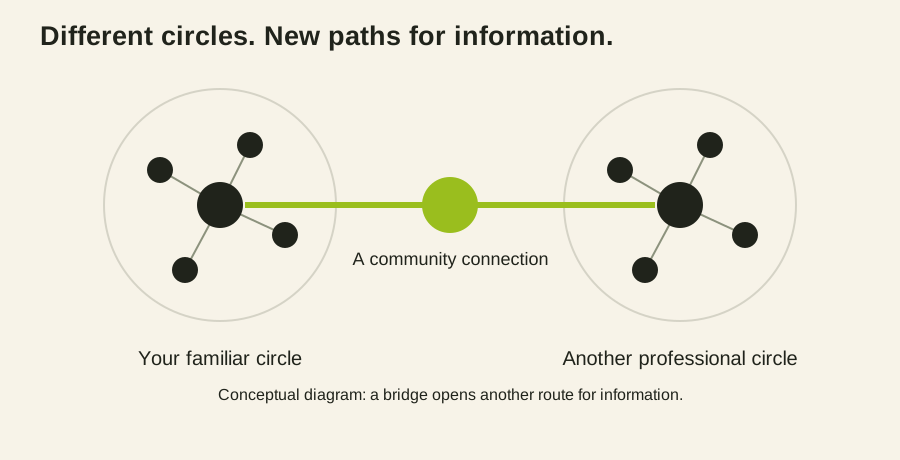
Conceptual illustration, not measured network data.
The gap between valuing a network and maintaining one
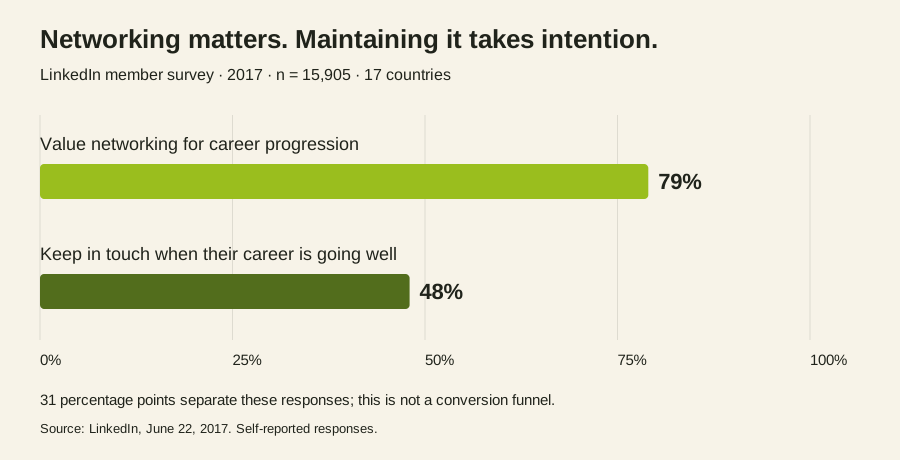
In LinkedIn's 2017 survey of 15,905 members across 17 countries, 79% valued networking for career progression, while 48% said they stayed in touch when their career was going well. The 31-percentage-point difference compares two responses, not stages of a funnel. These historical, self-reported results are not a current population estimate. LinkedIn survey and methodology
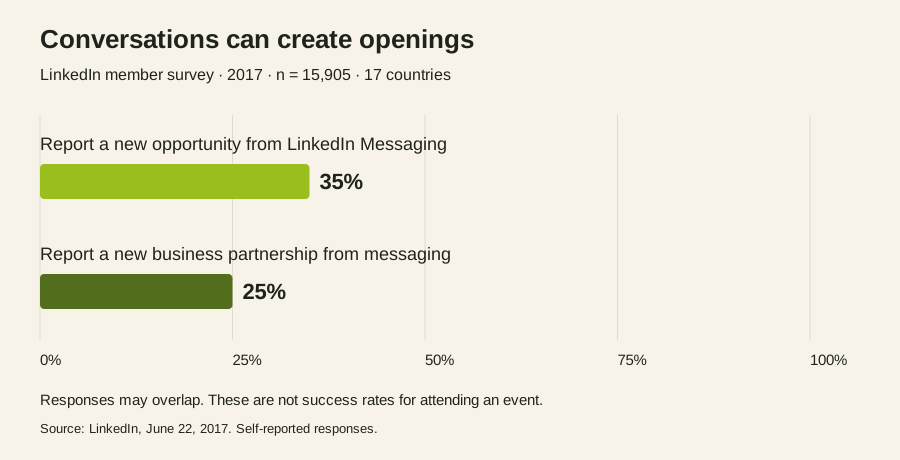
The same survey reported 35% had experienced a new opportunity through LinkedIn Messaging and 25% had established a business partnership through those conversations. Responses can overlap; neither percentage predicts results from attending a local event. LinkedIn, June 2017
Regular contact is a habit worth building before an urgent need appears. A short message about a shared interest is often a better starting point than an immediate request for a referral.
Two communities that put connection into practice
IT Professionals Community: shared technical context
The IT Professionals Community describes a network of nonprofit groups serving Charlotte, Lake Norman, Gaston County, and Raleigh-Durham. Its activities include meetups, panel discussions, skills workshops, leadership roundtables, social events, and community outreach. Its website also describes mentorship, scholarships, and fundraising supporting digital inclusion. Community overview
For an infrastructure team, our suggested approach is to arrive with a concrete question: how did others test their recovery plan, organize a cloud migration, or hand over a new platform? Share a lesson in return, without exposing confidential details. That makes the conversation useful to both sides.
Business Happy Hour (BH2): connections across industries
Business Happy Hour presents a monthly networking format for entrepreneurs. Its guidelines emphasize respecting time, constructive discussion, confidentiality, and meeting at least three new people. Its FAQ recommends following up within 24–48 hours. These are organizer recommendations, not performance guarantees. BH2 guidelines and FAQ
A cross-industry conversation can help a technology business understand problems in the language of the people experiencing them. A business owner may describe missed appointments or repeated data entry rather than ask for an integration. Listening first helps reveal the actual need.
These organizations illustrate community formats. We are not attributing membership growth, revenue, referrals, or hiring outcomes to either group, and their activities were not evaluated in the research cited above.
Turn a conversation into a useful relationship
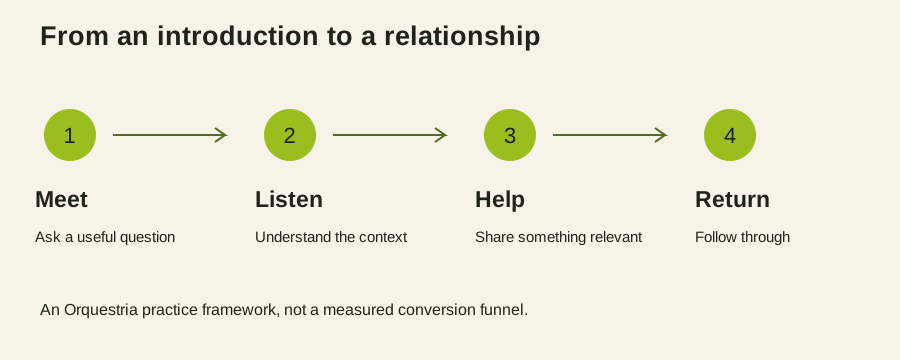
An Orquestria practice framework, not a measured conversion funnel.
Before the event: choose a question you want to understand and one experience you can share. A concise introduction should explain the problems your company helps solve, without becoming a sales presentation.
During the conversation: ask what the other person is working on, what is difficult, and what they have already tried. Offer an introduction only when it is relevant and both people agree to it.
Afterward: refer to something specific you discussed. Send the resource or introduction you promised. Keep the first follow-up small enough to answer easily.
For example: “You mentioned that recovery testing is difficult to schedule. Here is the checklist we discussed. If useful, I can introduce you to a peer who has organized a similar exercise.” Only offer that introduction if you can actually make it.
Over time: reconnect when you have a useful reason. Celebrate a milestone, share a relevant event, or ask how a project turned out. Avoid turning every exchange into a pitch.
Measure contribution before counting outcomes
A useful team review asks whether promised follow-ups happened, whether introductions were relevant, and whether relationships continue across several conversations. Record only appropriate details, respect confidentiality, and ask permission before sharing someone else's contact information.
If you track project inquiries or partnerships, record the actual path that led to them. Do not treat every contact as a lead or assume an event caused an outcome simply because it came first.
At Orquestria, we see connection as part of responsible delivery: understanding people, sharing knowledge, and bringing the right expertise into the conversation. Explore our customers and connections, visit IT Professionals Community and BH2, or start a conversation with our team.
Sources and reading notes
- Rajkumar and colleagues, Science, September 2022: randomized LinkedIn experiments.
- MIT News, September 15, 2022: interpretation and limits.
- LinkedIn Corporate Communications, June 22, 2017: survey percentages and methodology.
- IT Professionals Community: organization description and activities.
- Business Happy Hour: event format, guidelines, and follow-up advice.
Sources checked September 19, 2026. Charts use the cited 2017 survey; diagrams illustrate concepts rather than observed outcomes.
Let’s start a conversation.
Meet the people and communities connected to our work.
Explore our connections